
The Layer You Can't See
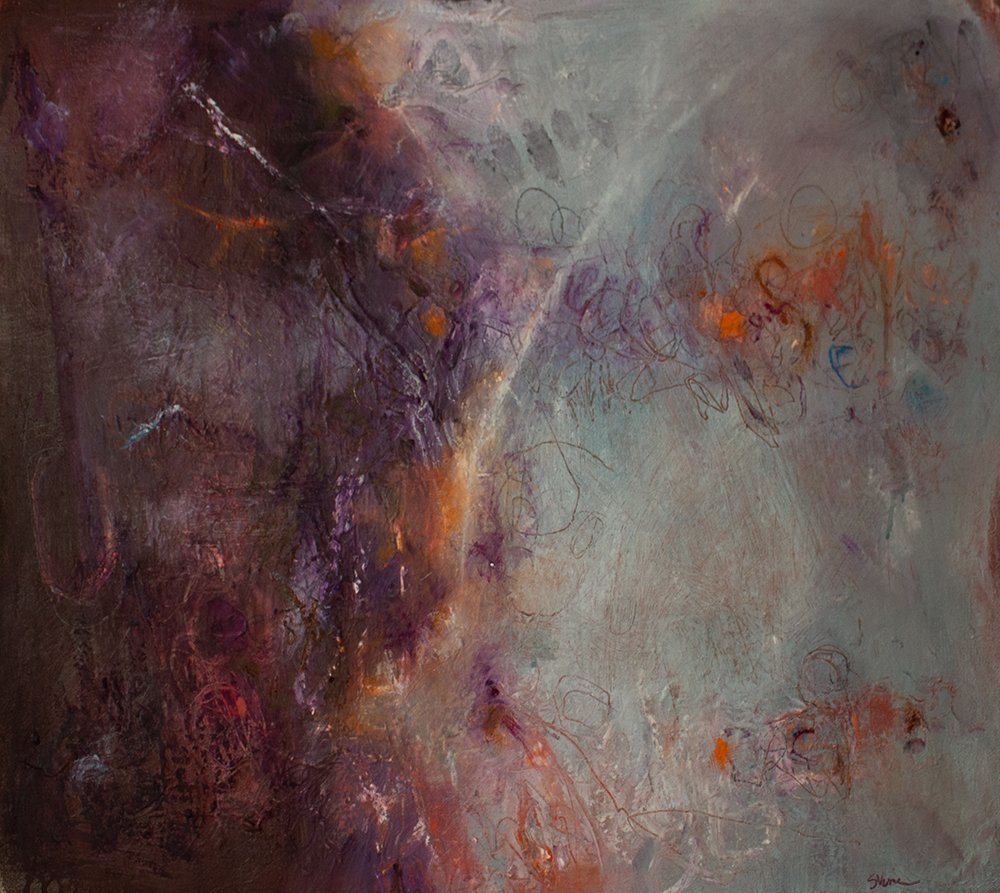
There is a painting hanging in my studio right now that I almost destroyed seven times.
You would never know that, looking at it. It is quiet. It holds its light carefully, the way certain rooms do in the late afternoon, something luminous moving through it that you can feel but can't quite locate. Deep plum pressing in from one side. Amber breaking through the center like an ember that survived everything. A cool silver-grey opening on the right that feels, to me, like the first real breath after something difficult. I knew when I started painting that day that I had found it and I could finally finish it.
It is called Threshold. And underneath it, invisible, permanent, structurally essential, is a history you cannot see.
What's actually in there
This painting began as something else entirely.
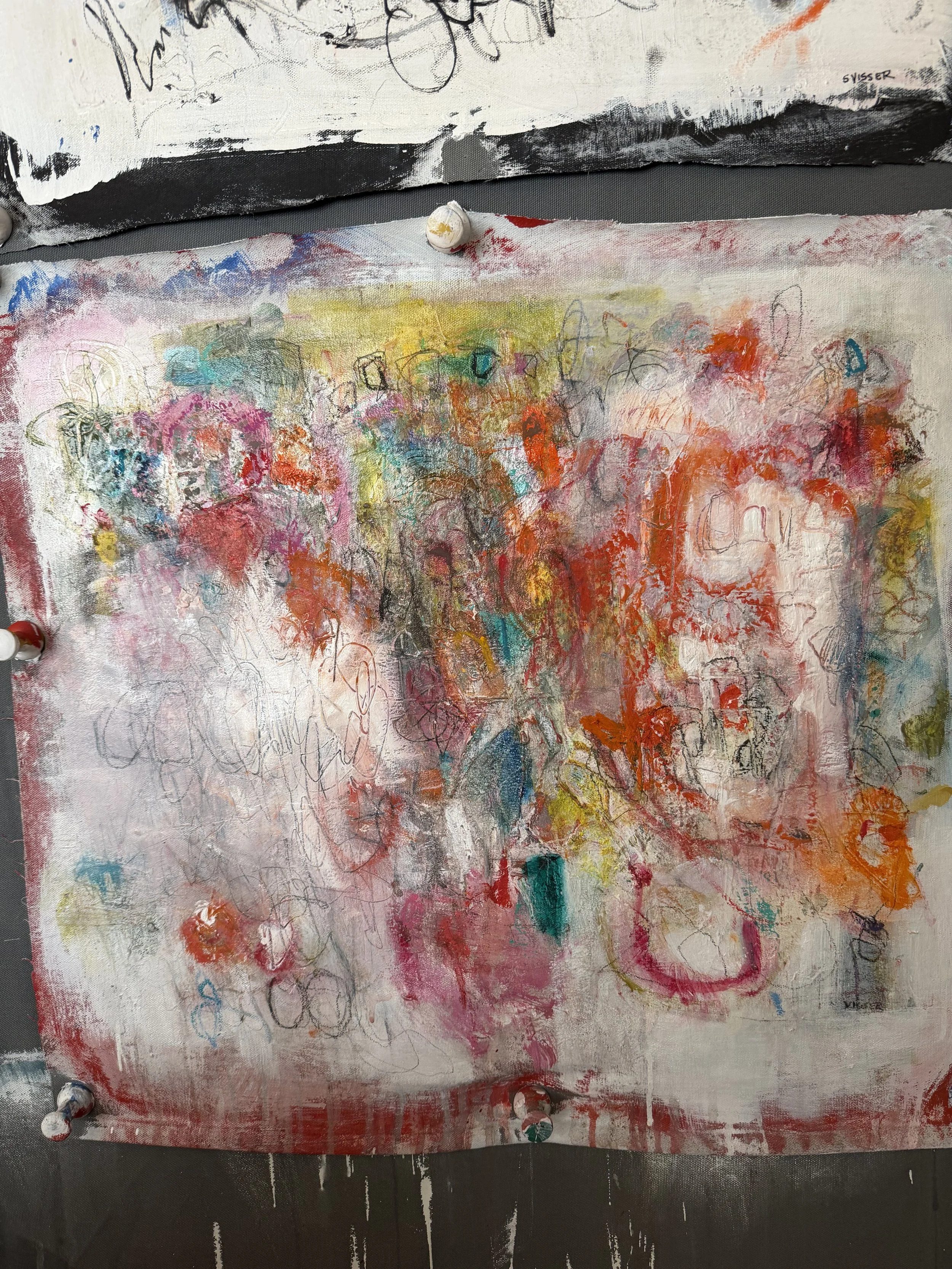
The beginning. Everything loud, everything open.
It started on canvas, thumbtacked to the studio wall, raw and explosive, saturated with orange and red, marks going everywhere at once. Pure possibility, which is another word for chaos. I loved it. I also knew it wasn't finished. So I kept going.
Then I covered it.
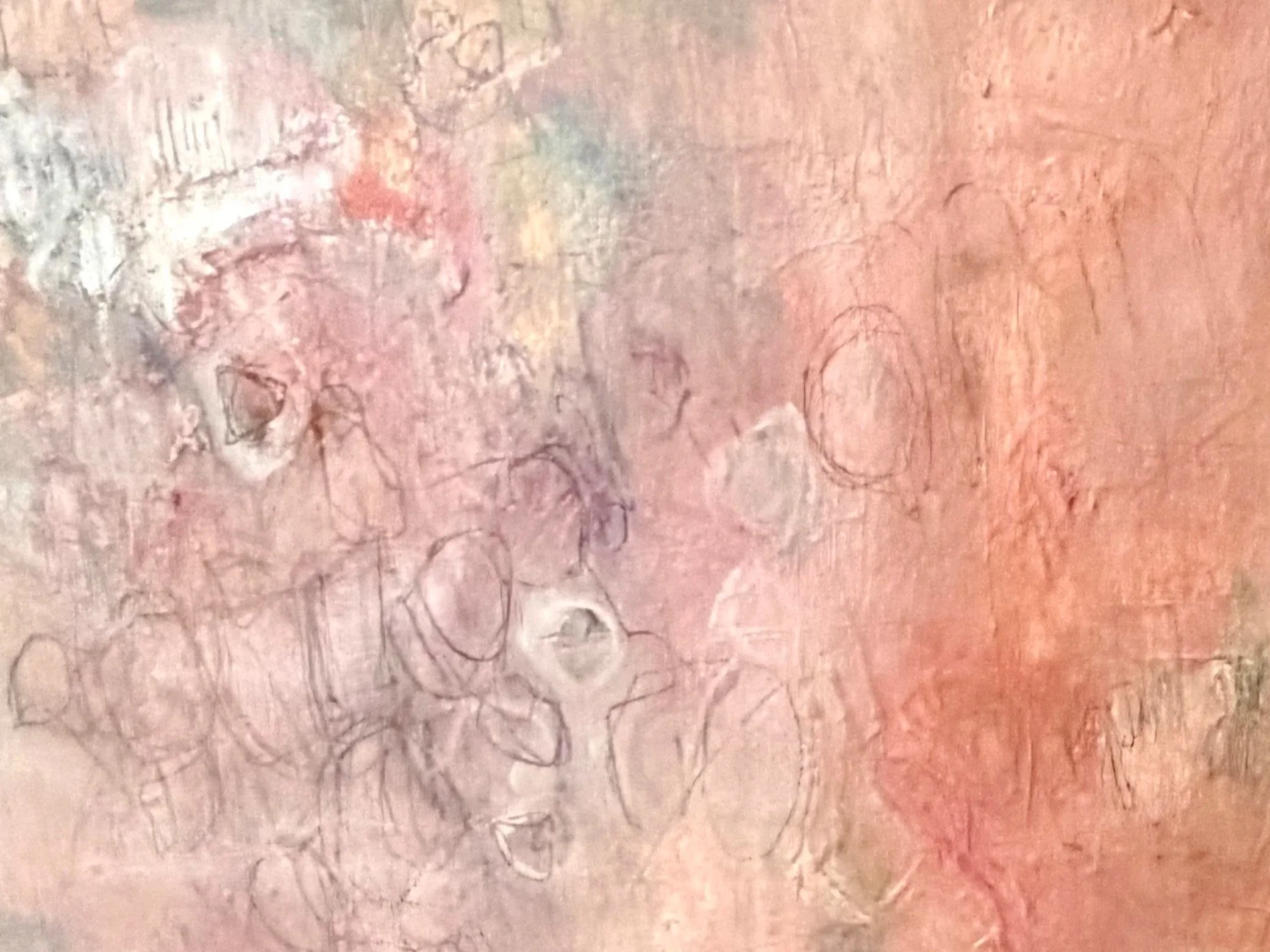
Covering. Not erasing.
A layer of grey. Then another. Silver. Pink. The orange disappeared. The red disappeared. Something quieter began to emerge, or so I thought. What was actually happening was more interesting than that: I wasn't removing anything. Paint doesn't work that way. Every layer I applied sat on top of what came before, pressing it down, holding it in place, adding to the accumulated depth of the surface.
The chaos was still there. Just underneath.
I kept going. The painting went through nine distinct stages, nine versions, nine conversations, nine moments of not knowing whether I was making something or ruining it. There was a point, around stage seven, where it went almost entirely dark.
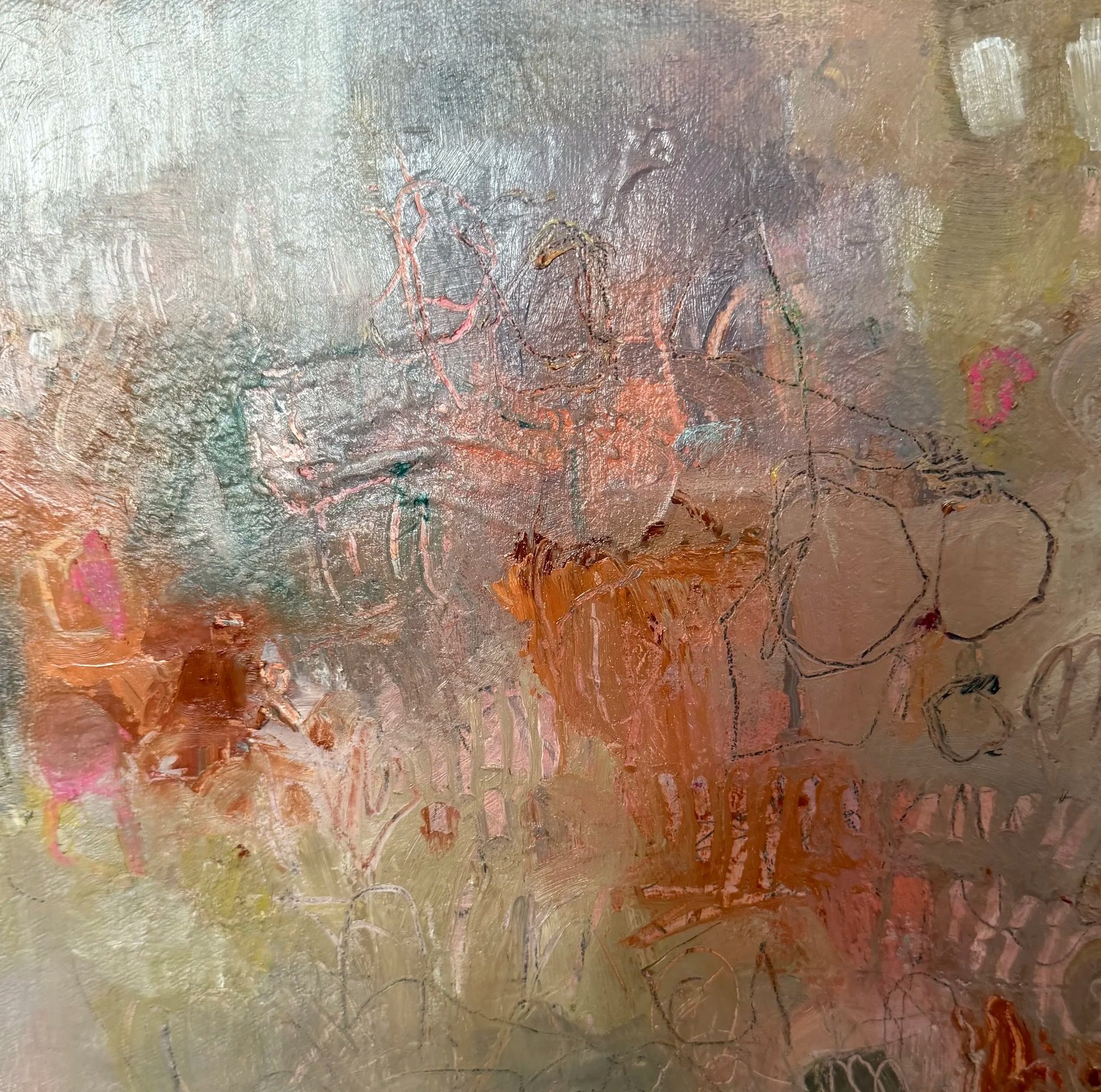
The stage I almost didn't survive.
I stood in front of it for a long time. It looked like a failure. It looked like everything good had been buried under everything wrong. I considered starting over.
I didn't. I kept going, not because I knew what was coming, but because I had cultivated patience, slowly and against my nature, and learned to trust the process past the point where trust feels reasonable.
And then something shifted. The painting began to breathe.
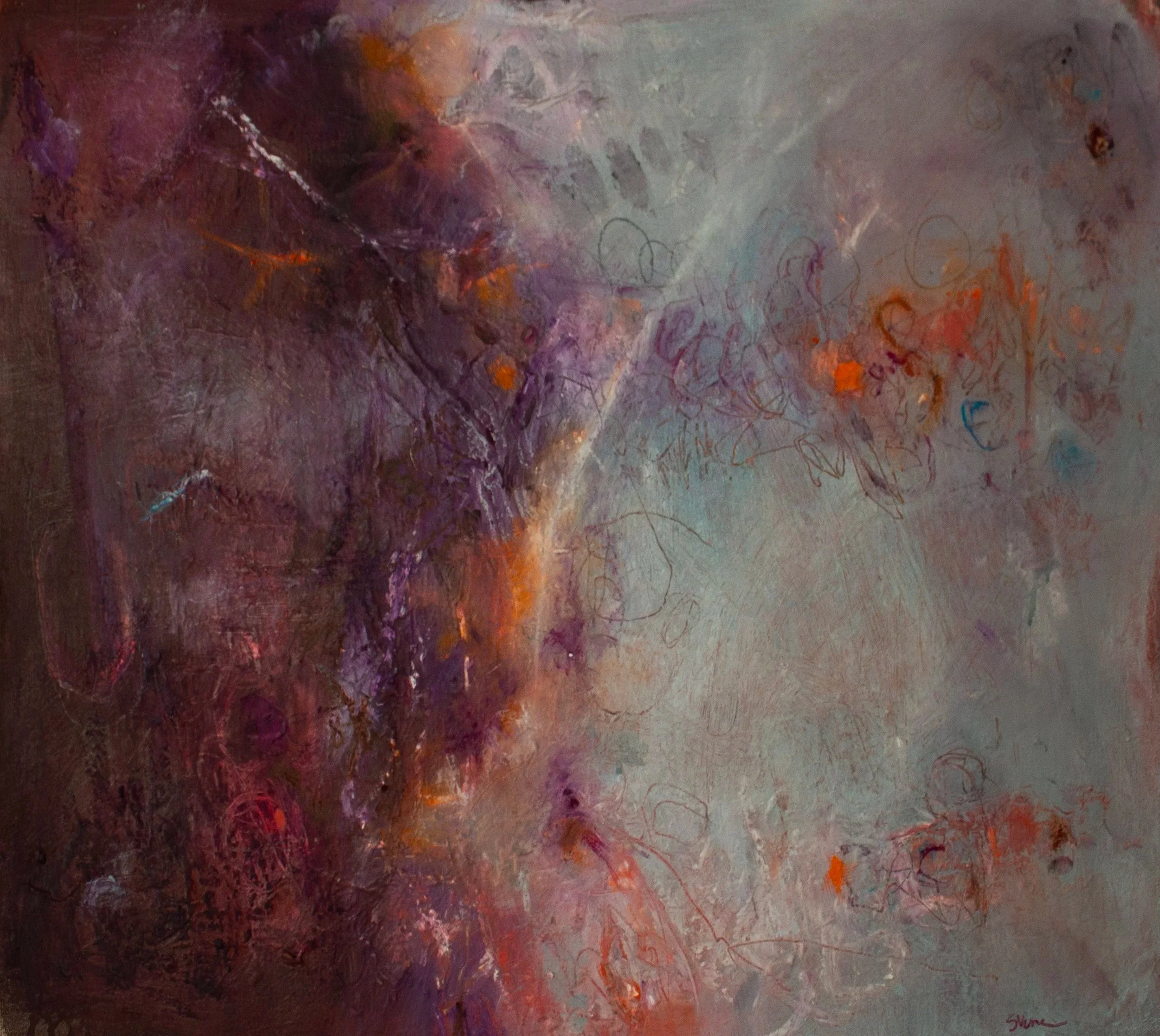
Threshold
Why it matters that you can't see the layers
Here is something I find endlessly fascinating about oil paint, and about painting in general: the luminosity you see in a deeply built surface is not an illusion. It is physics.
Light actually penetrates the upper layers of oil paint and bounces off what lies beneath before returning to your eye. The glow you sense in a painting with history is the history itself, made visible. You are not imagining depth when you stand in front of a painting that has it. You are seeing it, you're just seeing it from the inside out.
This is why some paintings stop you and others don't. It isn't always the color, or the composition, or even the skill. It's the accumulated presence of everything the painting passed through to become itself. The layers you cannot see are doing the most work.
I first understood this standing in front of an Arshile Gorky. I didn't know much about him at the time. But, I could feel a human being inside the painting, not represented, not illustrated, but present, the way a person is present in a room even when they're not speaking. The way that a person’s energy influences the tone in the room. That experience changed how I thought about what I was trying to do. I wasn't trying to make beautiful surfaces. I was trying to deposit something real inside them.
What this has to do with you
I have been thinking about this beyond the studio. Painting is like life. We get the chance to cover over what we don't think serves us. However, every version of yourself that didn't survive is still structurally present in the one that did. The grief you covered over. The person you were before something changed you. The chapter that went almost entirely dark before it shifted.
None of it is gone. It's underneath. It's in the luminosity, if there is any, of who you are now.
A threshold is not an arrival. It is the charged moment of standing at the edge of something, carrying everything you've passed through, not yet knowing what comes next. It is the most alive place there is.
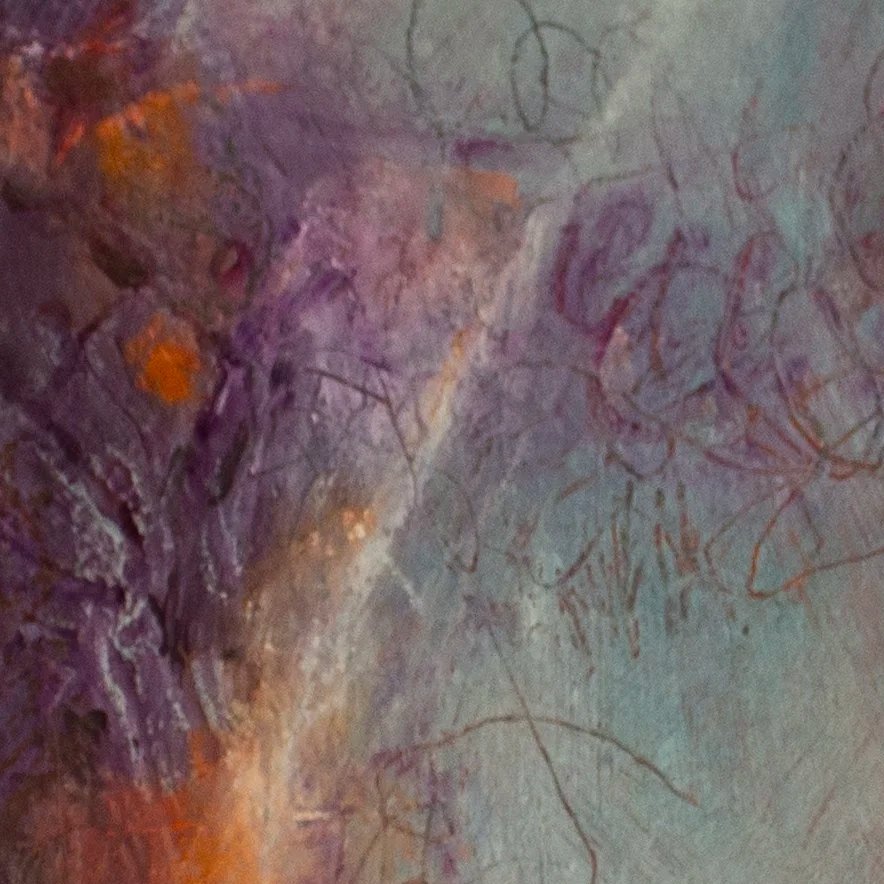
Threshold is 21 × 21 inches, oil on canvas, part of the Between Heaven and Earth series. It is available. If it found you, I'd love to find it a home. hello@stephanievisser.com